
Achieving High-Precision Fluid Control in Laboratory Experiments
The demand for accuracy, reproducibility, and efficiency in research has reached unprecedented levels. In fields such as microfluidics, chemical synthesis, and biomedical studies, precise fluid delivery plays a critical role in determining the reliability and quality of results. Even slight deviations in flow rates or droplet volumes can cause significant variability in experimental outcomes.
To overcome these challenges, researchers increasingly rely on high-precision syringe micropumps, such as Yellow Labware’s IPS Syringe Pump Systems[1], which provide the level of control necessary for sensitive and reproducible laboratory experiments.
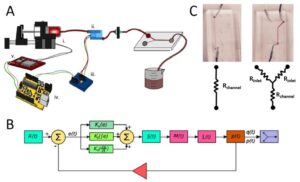
Figure: Experimental setup of a syringe pressure pump demonstrating precision fluid control in laboratory applications.
The Role of Syringe Micropumps in Lab Experiments
Syringe micropumps are engineered to deliver liquids with exceptional precision, controlling flow rates and volumes far beyond what manual pipetting or conventional pumps can achieve. They are ideal for applications where microliter—or even nanolitre—accuracy is essential.
The Yellow Labware IPS Syringe Pump[2] is designed to deliver liquids at highly controlled flow rates and volumes. Unlike manual pipetting or basic pumping methods, it excels in applications where even microliter-scale precision matters.
Key benefits include:
- Precision dosing: Perfect for experiments requiring micro- and nanolitre-level accuracy.
- Consistent results: Reliable delivery ensures reproducibility across multiple trials.
- Wide compatibility: Handles a variety of liquids, from aqueous buffers to viscous solutions.
- Enhanced efficiency: Automation reduces human error and streamlines workflows.
By incorporating syringe micropumps into laboratory routines, researchers gain more than just precision — they achieve greater confidence in their results, supporting reproducible, high-quality scientific data [3][3].
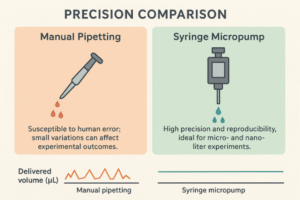
Figure: Comparison of manual pipetting and syringe micropump, demonstrating how automated pumps minimize human error and ensure consistent precision in lab experiments.
| Method | Advantages | Limitations |
| Manual Pipetting | Simple, inexpensive | Inconsistent, not scalable |
| Peristaltic Pumps | Great for continuous flow, cell culture | Less precise for small-volume dosing |
| Syringe Micropumps | High accuracy, reproducibility, control | Limited for large-volume transfers |
Applications Across Scientific Fields
Microfluidics and Lab-on-a-Chip Systems
Microfluidics research demands precise manipulation of small liquid volumes. Syringe micropumps enable controlled flow into microchannels, allowing researchers to study reaction kinetics, droplet formation, or cellular environments with confidence [4][4].
Yellow Labware’s IPS-12 Single Channel Syringe Pump[5] is particularly well-suited for microfluidics applications, offering stable and reproducible infusion.
- Consistent flow improves droplet uniformity in emulsification studies.
- Stable delivery enhances reproducibility in organ-on-a-chip platforms.
Biomedical and Pharmaceutical Research
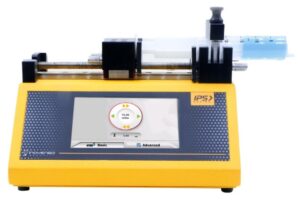
Figure 2: IPS-12R Single Channel Infusion/Withdrawal Syringe Pump (https://www.yellowlabware.com/ips12-single-channel-syringe-pump/ )
In drug discovery and delivery studies, accuracy is critical. Syringe micropumps such as the IPS-14 Multi-Channel Syringe Pump[6] ensure consistent administration of experimental compounds to cultures, test chambers, or animal models [6][6].
- Reliable dosing minimizes variability in pharmacokinetic studies.
- Microliter-scale delivery supports high-throughput drug screening [7][7].
Analytical and Chemical Applications
Chemical reactions often depend on strict control over reagent addition. Syringe micropumps allow slow, steady, or pulsed delivery, providing flexibility in studying reaction pathways. The IPS-13 Dual Channel Syringe Pump[8] is ideal for these workflows.
- Titration experiments benefit from stable dosing.
- Controlled addition prevents unwanted concentration spikes.
Best Practices for Using Syringe Micropumps
See Yellow Labware’s full range of syringe pumps for best-in-class options [9][9].
Choose the Right Syringe
- Use syringes compatible with the solution’s chemical properties.
- Smaller syringe diameters improve control at lower flow rates.
Calibrate Regularly
- Verify pump accuracy against known standards.
- Account for tubing elasticity and back pressure.
Control Environmental Factors
- Maintain stable temperature and humidity to minimize fluid property variations.
- Use vibration-free surfaces for ultra-precise delivery.
Maintain Cleanliness
- Flush syringes and tubing after each experiment to prevent contamination.
- Use sterile equipment for biological applications.
Future Perspectives: Driving Innovation in the Laboratory
The use of syringe micropumps is not limited to today’s workflows. As laboratories move toward automation, AI and remote control integration[10], and advanced microfluidics [11][11], these pumps will play a central role in:
- Automated multi-step experiments.
- Integration with machine learning for flow optimization.
- Miniaturized diagnostic and therapeutic devices.
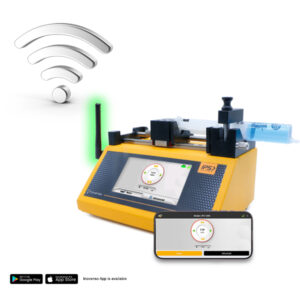
Inovenso IPS-15 smart syringe pump, Wi-Fi enabled for remote operation
Conclusion: Reproducibility Through Precision
From microfluidics to pharmaceutical testing, the importance of high-precision fluid control cannot be overstated. Yellow Labware’s IPS Syringe Pump Systems[12] provide the accuracy, reproducibility, and flexibility that today’s researchers demand. By adopting best practices and integrating these devices into workflows, laboratories can achieve consistent results and reduce variability across experiments.
For further reading: – Microfluidics research: pubmed.ncbi.nlm.nih.gov/30001982/ – Micropump engineering: sciencedirect.com/topics/engineering/micropump
References
[1] Yellow Labware – IPS Syringe Pump Systems
[2] Yellow Labware – IPS Syringe Pump Systems
[3] ScienceDirect – Micropump Overview
[4] PubMed – Microfluidics Research
[5] Yellow Labware – IPS-12 Single Channel
[6] Yellow Labware – IPS-14 Multi Channel | ScienceDirect
[8] Yellow Labware – IPS-13 Dual Channel
[9] Advanced Materials – Micropump Journal
[10] Yellow Labware – IPS-15/16 WiFi Series